
Boat, ATV, train and plane
Dallas train accident lawyer.
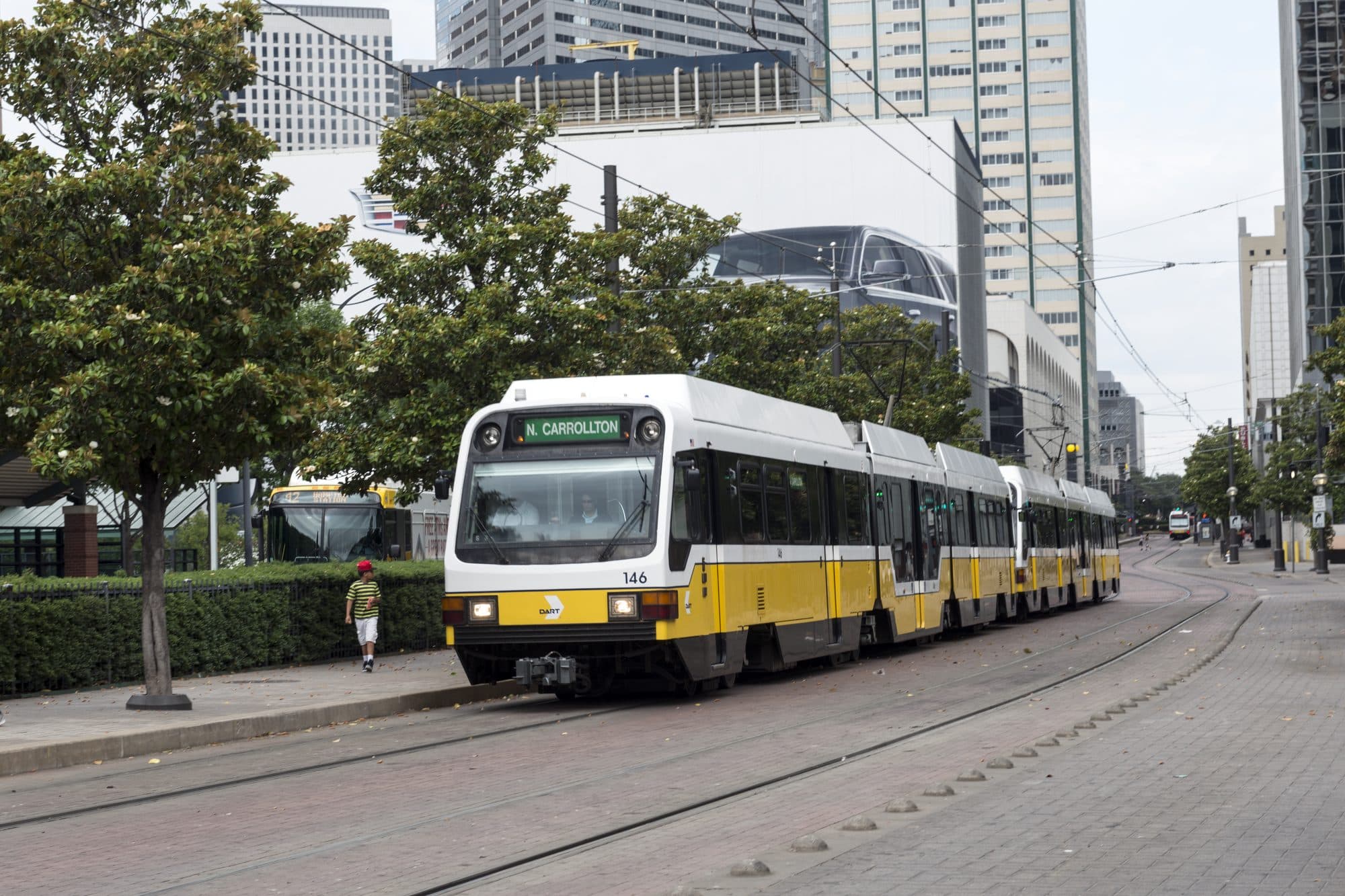
Railroads investigate their own crashes right away, and they control the most important evidence: the locomotive's event recorder, the train's cameras and the crossing signal records. Federal law also shapes which claims can go forward. If you or your family were hurt at a crossing, on a DART train or on the TRE, we move fast to preserve that evidence, look at the crossing itself and send any notice a public agency requires.
Right now
If the train accident just happened.
- 01
Get medical care
Collisions with trains cause serious injuries even at low speed. Go to the ER and keep every record.
- 02
Photograph the blue sign at the crossing
Every public crossing has a blue emergency sign with the railroad's phone number and a crossing ID number. That number identifies the exact crossing in federal records.
- 03
Photograph the crossing itself
The gates, lights, bells, signs, any brush or buildings blocking the view down the tracks, and the condition of the road over the rails.
- 04
Get the police report and witness names
Write down the officer's name and case number. Drivers who were stopped at the crossing often saw whether the lights and gates worked.
- 05
Do not talk to the railroad's claim agent
Railroads have their own claim agents and police. You do not have to give a statement. Call us first. The first consultation is free, in English or Spanish.
Key deadlines and numbers
- Deadline to sue
- 2 years from the accidentSource: Tex. Civ. Prac. & Rem. Code 16.003
- Claims against DART or another public agency
- Written notice often within 6 months, sometimes soonerSource: Tex. Civ. Prac. & Rem. Code 101.101
- Train horn at public crossings
- 15 to 20 seconds before the crossing, unless it is a quiet zoneSource: 49 C.F.R. 222.21
- Locomotive event recorder
- Required on most lead locomotives: speed, throttle, brakes, hornSource: 49 C.F.R. 229.135
- Railroad workers hurt on the job
- Federal claim (FELA) with a 3 year deadlineSource: 45 U.S.C. 56
Texas law
How the law treats a train accident.
Train cases mix Texas negligence law with federal railroad rules. Drivers must stop for a train, and railroads must sound the horn, keep signals working and keep crossings safe. Federal law can block some claims, like a complaint about train speed that was within the federal limit, while others go forward. Knowing which is which early shapes the whole case.
| Who | When they may be responsible |
|---|---|
| Freight railroad | No horn, signals that failed, brush or equipment blocking the view, a rough crossing, crew error. |
| DART or the TRE | Operator error, door and platform injuries, crossing problems on their lines. Government notice rules apply. |
| A city, county or the state | Road design, signs and pavement markings approaching the crossing, under the Tort Claims Act limits. |
| Another driver | Pushing a car onto the tracks, going around gates, stopping on the tracks in traffic. |
Drivers must stop for a train
Texas law requires drivers to stop when signals are flashing, gates are down or a train is close. Railroads use this to blame the driver, so we look hard at whether the warnings actually worked and whether the train was visible.
Source: Tex. Transp. Code 545.251Federal law can block some claims
Federal railroad safety law overrides some state claims, such as train speed within federal limits and certain crossing signal choices paid for with federal money. A claim that the railroad broke a federal rule, like failing to sound the horn, can still go forward.
Source: 49 U.S.C. 20106DART rail is a government claim
DART is treated as a government unit, so claims for injuries on its light rail follow the Texas Tort Claims Act, with notice deadlines and damage limits.
Source: Tex. Civ. Prac. & Rem. Code 101.023How we work
How we build a train case.
Mr. Estrada reads your file and sets the strategy. Our team works the details with him, and you get updates in English or Spanish.
01
Preserve the train data
Preservation letters for the event recorder download, forward and inward facing video, crew radio and dispatch records, and the signal system's own logs.
02
Study the crossing
Sight lines down the tracks, vegetation, signs, signal timing, the crossing's federal inventory record and its history of prior crashes and complaints.
03
Get the railroad's reports
Railroads must report crossing accidents to the Federal Railroad Administration. We get those reports, the crew's statements and maintenance and inspection records.
04
Send any government notice
For DART, the TRE, or a city or county road issue, we send written notice within the deadline.
05
Value the loss and prepare for trial
With doctors, life care planners and economists in serious cases. Railroads defend hard, so we prepare every case as if it will be tried.

Who handles it
The lawyer on the sign is the lawyer on your case.
Mr. Estrada has practiced in Texas since 2003, in state court and in the Northern, Eastern and Western federal districts of Texas. He reads the file and sets the strategy, with associates and staff who work the case alongside him. Everything is explained to you in English or Spanish.
What clients say
“Our experience with this law firm was simply everything we could've asked for. They answered all of our questions in a timely manner, followed up with us. As for pricing, it was very reasonable and honestly less than we anticipated. Last, but not least, thank you Liz and Vianey for being so helpful throughout this process.”Questions people ask us about money and work.
- Who pays my medical bills right now?
- Usually your PIP, your health insurance, or a doctor who agrees to wait for the case. Railroads do not pay as you go. We help line it up so treatment does not stop.
- I work for the railroad and got hurt
- Railroad workers are not covered by regular workers' comp. They have a federal claim under FELA, with its own rules and a three year deadline.
- Do I need papers to make a claim?
- No. If you were hurt by someone else's negligence, you can make a claim. Talk to us privately. What you tell us stays between you and the firm.
Dallas and Odessa
Rail lines in Dallas and West Texas.
Union Pacific and BNSF freight lines cross Dallas County at dozens of street crossings, DART light rail runs through Oak Cliff on its way south, and the TRE connects Dallas and Fort Worth. We handle crossing crashes and rail injuries from our Oak Cliff office. In West Texas, freight trains run beside I-20 through Odessa and Midland, and our Odessa office handles crossing crashes there.
FAQ
Questions people ask.
The gates did not come down. Who is responsible?
If the warning system failed, the railroad that maintains it may be responsible. Signal systems keep their own records, and those records should be preserved quickly. Witnesses who were stopped nearby also help.
The crossing had only a sign, no lights or gates. Do I have a claim?
Maybe. Federal law limits some claims about which warning devices a crossing should have, but other claims can remain, like a blocked view, a horn that was not sounded or a crew that did not react. It depends on the crossing's history and the evidence.
I was hurt on a DART train or platform
Claims against DART follow the Texas Tort Claims Act. Written notice is often due within 6 months, and damages are limited. Write down the train, the station and the time, and call soon.
How long do I have to file?
Generally two years for a crossing crash, much less to give notice to a public agency, and three years for a railroad worker under FELA. The train's data is controlled by the railroad, so call early.
My family member died at a railroad crossing
We are sorry. The spouse, children and parents can bring a wrongful death claim, generally within two years of the death. We handle these cases with care and keep the family informed.
How much does it cost to hire you?
The first consultation is free. Injury cases are handled on a contingency fee, which means the fee comes out of the recovery, not out of your pocket. We explain the exact terms, including case costs, before you sign.
Related situations
- Car accidents
- Pedestrian and bicycle accidents
- Bus accidents
- Wrongful death
- Catastrophic injuries
- Workplace injuries
- All: Personal Injury
Updated October 2026
This page is general information about Texas law, not legal advice for your situation. Reading it does not create an attorney client relationship. Every case is different, and past results do not guarantee a future outcome.
Two offices
Oak Cliff and Odessa.
Mon to Fri 9 to 5, Sat 9 to 12. Emergencies 24/7 by phone.
Law Office of Olegario Estrada, P.C.
We explain everything.We answer 24/7.Se habla español.
Free consultation by phone, video, or in person. Offices in Dallas and Odessa.