
Arrested or wanted right now
Dallas jail release and warrant lawyer.
When someone is arrested, the first 48 hours decide where they sit, how much the bond is and what rules come with it. Call us before you pay a bondsman or post cash. We have dealt with all the local jails, and we will lay out every release option, the fastest and the cheapest, so you can decide. We answer 24/7, in English or Spanish.
Right now
If someone was just arrested.
- 01
Find out where they are held
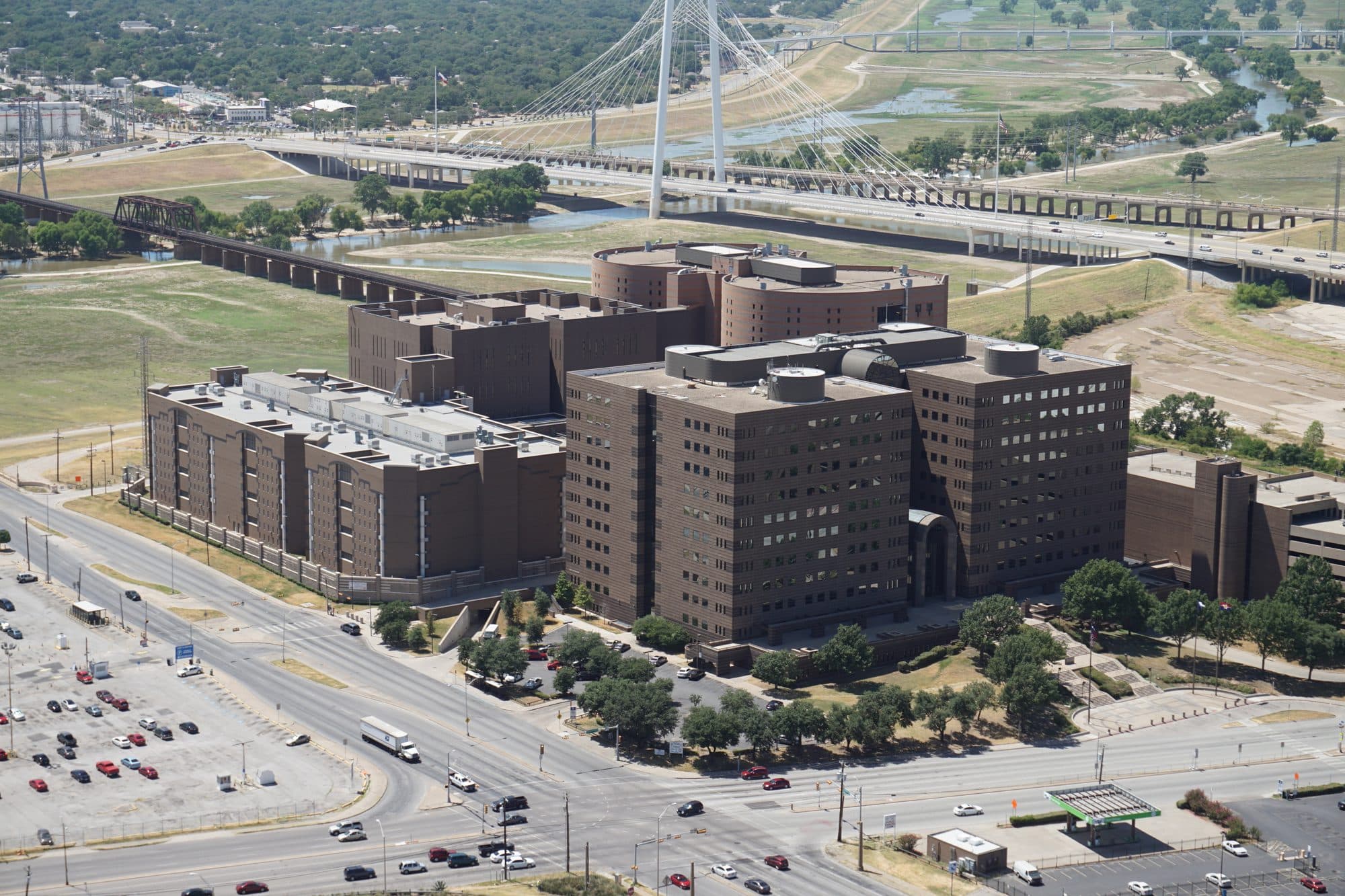
In Dallas County most arrests end up at the Lew Sterrett Justice Center, and you can search by name on the county's online jail lookup. Some suburban cities hold people in their own jail first. In Odessa, call the Ector County jail. Have the full legal name and date of birth ready.
- 02
Expect a magistrate within 48 hours
A magistrate reads the charges, sets the bond and adds conditions. Get us the booking number and the charge as soon as you have them, so we can look at the bond before you pay anything.
- 03
Do not discuss the case on jail phones
Jail calls and video visits are recorded, and prosecutors listen to them. Tell your family member to talk about the case only with their lawyer, not with you, other inmates or officers.
- 04
Ask about holds before you pay
A hold from immigration (ICE), another county or a probation case can keep someone in jail even after bond is paid. If there is an ICE detainer, call us first: paying the bond can mean a transfer to immigration custody instead of a trip home.
- 05
Compare the release options
Cash bond, a bondsman, an attorney bond or a personal bond each cost and work differently. A bondsman's fee is usually not refunded, even if the case is dismissed. We explain the difference in plain words.
- 06
If the warrant is for you, do not wait
A warrant does not expire. Being picked up at a traffic stop or at work means a night in jail on their schedule. We can confirm the warrant and set up the bond so you turn yourself in on your terms.
Key deadlines and numbers
- Time to see a magistrate
- Within 48 hours of arrestSource: Tex. Code Crim. Proc. art. 15.17
- If the State is not ready for trial
- Release on personal bond or lower bail after 90 days in jail (felony) or 30 days (Class A), with exceptionsSource: Tex. Code Crim. Proc. art. 17.151
- Personal bonds since 2025
- Not allowed for many violent and repeat charges (SB 9)Source: Texas Judicial Branch, SB 9 overview
- Bail can be denied
- For listed violent and sexual felonies when the State proves flight risk or danger (Proposition 3, approved November 2025)
- Family violence arrest
- Emergency protective order for 31 to 61 days, longer with serious injury or a weaponSource: Tex. Code Crim. Proc. art. 17.292
- Repeat DWI or intoxication assault
- Ignition interlock as a bond conditionSource: Tex. Code Crim. Proc. art. 17.441
Texas law
How bond works in Texas.
Bail is there to make sure a person comes back to court and to protect the people involved. It is not supposed to be a punishment. The magistrate weighs the charge, criminal history, safety, ties to the community and what the person can afford to pay. The level of the charge drives most of that.
| Level | Range of punishment | Notes |
|---|---|---|
| Class C misdemeanor | Fine up to $500, no jail | Most traffic tickets. Unpaid tickets can still turn into arrest warrants. |
| Class B misdemeanor | Up to 180 days in county jail and up to $2,000 | Example: a first DWI. |
| Class A misdemeanor | Up to 1 year in county jail and up to $4,000 | Example: assault causing bodily injury. The 30-day rule applies. |
| State jail felony | 180 days to 2 years in state jail and up to $10,000 | Example: possession of less than 1 gram of a Penalty Group 1 drug. |
| Third degree felony | 2 to 10 years in prison and up to $10,000 | Example: a third DWI. The 90-day rule applies to all felonies. |
| Second degree felony | 2 to 20 years in prison and up to $10,000 | Example: aggravated assault. Many charges at this level are on the SB 9 list. |
| First degree felony | 5 to 99 years or life and up to $10,000 | Example: aggravated robbery. Bail can be denied under Proposition 3. |
Four ways out
A cash bond is the full amount paid to the court and mostly returned when the case ends. A surety bond goes through a bondsman for a fee you do not get back. A personal bond is a signed promise, sometimes with a small fee and supervision. A Texas lawyer can also post an attorney bond for a client.
Source: Tex. Occ. Code 1704.163A high bond can be challenged
Bail cannot be used as an instrument of oppression, and the court must consider the ability to pay. We can file a motion to reduce bond or a writ of habeas corpus and ask the judge for a hearing.
Source: Tex. Code Crim. Proc. art. 17.15The conditions matter as much as the amount
No contact with the complaining witness, an interlock, GPS, drug tests or a curfew can come with the bond. Breaking a condition can mean a new arrest and losing the bond.
Source: Tex. Code Crim. Proc. ch. 17Some warrants come with no bond
A warrant on a motion to revoke probation or to adjudicate guilt is often issued with no bond or a high one. The judge can still set or lower a bond, and we ask for it.
Source: Tex. Code Crim. Proc. art. 42A.751How we work
How we get them out and protect the case.
Mr. Estrada reads the charge and the bond and sets the plan. Our team works the jail, the bondsman and the court with him, and you get updates in English or Spanish.
01
Check the jail record
We confirm the exact charges, each bond amount, and any hold from another county, a probation case or immigration, so nothing surprises you after you pay.
02
Choose the release with you
Sometimes people want fast, sometimes they want the lowest cost. We explain each option, including an attorney bond when it fits the case, and you decide.
03
Ask for a lower bond
When the bond is out of reach, we file for a reduction or a personal bond and bring proof of a job, family, a home and ties to Dallas or Odessa to the hearing.
04
Clear warrants on your terms
For a new warrant, a missed court date or an old ticket, we verify the warrant, arrange the bond ahead of time and plan the walk-through so you spend as little time as possible in booking.
05
Start the defense the day they get out
We explain every bond condition, request the police reports and body camera video, and in serious cases bring in investigators early, before witnesses and video disappear.

Who handles it
The lawyer on the sign is the lawyer on your case.
Mr. Estrada has practiced in Texas since 2003, in state court and in the Northern, Eastern and Western federal districts of Texas. He reads the file and sets the strategy, with associates and staff who work the case alongside him. Everything is explained to you in English or Spanish.
What clients say
“He made sure he addressed all of our questions and put us at ease. He never made it seem like we were an inconvenience.”What families ask us after an arrest.
- Will immigration find out?
- Fingerprints taken at booking are shared with federal agencies, and ICE can place a detainer. Talk to us before posting bond and before any plea, because the wrong plea can cost someone their status.
- Does the arrest stay on their record?
- The arrest shows on background checks even before there is a conviction. If the case is dismissed or ends in an acquittal, it may be possible to expunge it later.
- What about their driver's license?
- After a DWI arrest there are only 15 days to ask for a hearing to protect the license. That clock runs even while the person is still in jail.
- What happens to their guns?
- In family violence cases, bond conditions and protective orders usually require giving up firearms while the case is open. A violation is a new crime.
Dallas and Odessa
Dallas County and Ector County jails.
In Dallas, arrests by Dallas police and many surrounding cities are booked into the Lew Sterrett Justice Center at 111 W. Commerce Street, and cases are heard at the Frank Crowley Courts Building on Riverfront Boulevard. Our Oak Cliff office on Jefferson Boulevard is a short drive from both. In West Texas, our Odessa office handles arrests booked into the Ector County jail and cases at the Ector County courthouse, including stops along I-20.
FAQ
Questions people ask.
How long does it take to get out of Lew Sterrett?
It depends on when the magistrate sees the person, whether bond is posted right away and whether there are other holds. Even after bond is paid, release processing can take hours. We tell you what is holding things up and what can move it.
How much will the bond be?
There is no single price. The magistrate looks at the charge, the person's history, safety concerns and ability to pay. If the amount is set too high, we can ask the judge to lower it.
What is an attorney bond?
Texas lets a licensed lawyer post bond for a client the lawyer represents, instead of a bondsman. It can be a good fit for warrants and smaller bonds. We tell you up front whether it makes sense in your case.
Can I turn myself in on a warrant with a lawyer?
Yes, and it is usually the better way. We confirm the warrant and the bond amount, have the bond ready and plan the timing, so you are not held longer than needed. It also shows the court you took it seriously.
What if my family member has an immigration hold?
An ICE detainer can mean that paying the bond sends the person to immigration custody. Call us before paying. We look at the criminal case and the immigration risk together before you decide.
What if the warrant is for probation?
Probation warrants are often issued with no bond. That does not mean the person must stay in jail until the case ends. We can ask the judge to set a bond and start working on the violation right away.
How much does it cost to hire you?
The first consultation is free, by phone, video or in person. We discuss the fee and payment options up front, before you sign anything.
Related situations
- Probation violations
- Assault and family violence
- Protective orders
- Immigration consequences of a charge
- DWI
- Federal arrest and detention hearing
- All: State Criminal Defense
Updated October 2026
This page is general information about Texas law, not legal advice for your situation. Reading it does not create an attorney client relationship. Every case is different, and past results do not guarantee a future outcome.
Two offices
Oak Cliff and Odessa.
Mon to Fri 9 to 5, Sat 9 to 12. Emergencies 24/7 by phone.
Law Office of Olegario Estrada, P.C.
We explain everything.We answer 24/7.Se habla español.
Free consultation by phone, video, or in person. Offices in Dallas and Odessa.